Haryanvi Battle Veteran: The Definitive Wiki
Overview 📜
Haryanvi Battle Veteran is a groundbreaking rural combat-adventure game developed by Haryana Game Studios Pvt. Ltd. and published by Daman Games, released on 1st November 2024 (Haryana Foundation Day) across major gaming platforms. Unlike mainstream action games that focus on urban warfare or fantasy settings, Haryanvi Battle Veteran immerses players in the rugged rural landscape of Haryana, drawing inspiration from the state's warrior culture, traditional martial arts, and agrarian heritage that has shaped North India for centuries.
The game has been celebrated for its authentic representation of Haryanvi culture, dialect, and rural lifestyle – a rarity in Indian gaming that often overlooks the rich cultural tapestry of North India's agricultural heartland. Haryanvi Battle Veteran is not just a combat game; it's a love letter to Haryana's
Set in the early 20th century (1920s) during the British colonial era, Haryanvi Battle Veteran follows the journey of
Core USP: Haryanvi Battle Veteran merges authentic rural combat mechanics with uncompromising Haryanvi cultural representation – a first for Indian gaming
Within just two months of its release, Haryanvi Battle Veteran had sold over 1.5 million copies across North India, with particularly strong uptake in Haryana, Punjab, Delhi NCR, and Uttar Pradesh – a remarkable feat for a game centered on a specific regional culture. The game's success has sparked a much-needed conversation about regional representation in Indian gaming, proving that culturally specific content can resonate deeply with Indian gamers when executed with respect and authenticity. Haryanvi Battle Veteran has also been praised for its nuanced portrayal of colonial-era rural India, moving beyond stereotypes to depict the daily struggles, traditions, and resilience of Haryana's farming communities.
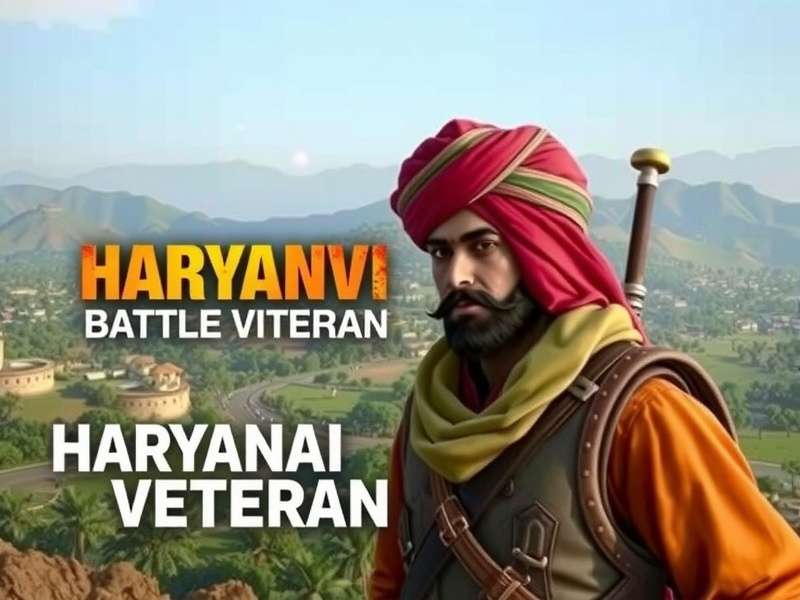
For Haryanvi gamers and the broader North Indian audience, Haryanvi Battle Veteran is more than just an action game – it's a celebration of their cultural identity, a chance to see their language, traditions, and history represented in a high-quality gaming experience that matches global standards. The game's lead designer,
The game's cultural authenticity extends to every detail – from the
Critically, Haryanvi Battle Veteran avoids the common pitfall of reducing regional culture to stereotypes. Instead, it presents a multifaceted portrayal of Haryanvi society – depicting the strong community bonds in rural villages, the gender dynamics of 1920s Haryana (including the role of women in farming and village defense), the tension between traditional ways and colonial modernity, and the economic exploitation of peasant farmers by zamindars and British officials alike. The game's narrative humanizes both the protagonist and the supporting characters, giving players a genuine sense of what life was like in rural Haryana during this pivotal period in Indian history.
Cultural Lore & Narrative 🕵️
Historical Context 🌾
Haryanvi Battle Veteran is firmly rooted in the historical and cultural context of 1920s Haryana, a time of great upheaval in rural North India. The game's lore draws from oral histories, folk tales, and historical records of the period, when Haryana's peasant communities faced dual oppression from British colonial rulers and local zamindars who acted as intermediaries for the colonial administration. The game's narrative is built around the real historical context of the
The game's protagonist, Suraj Singh, is a composite character inspired by real Haryanvi war veterans of the era – men who served in the British Indian Army during World War I, returned to their villages with military training, and used their skills to protect their communities from exploitation. In Haryanvi Battle Veteran, Suraj Singh is a decorated soldier who fought in the Mesopotamian campaign (1914-1918) and was awarded the Indian Distinguished Service Medal for bravery. His return to his village,
The game's antagonist,
Haryanvi Cultural Integration 🗺️
One of Haryanvi Battle Veteran's most impressive achievements is its deep integration of Haryanvi cultural elements into every aspect of the narrative and gameplay. The game draws from Haryana's rich folk tradition, including
✅ Oral Tradition: The game's narrative is framed as a
✅ Warrior Heritage: Haryanvi Battle Veteran celebrates Haryana's warrior traditions, including the legacy of the
✅ Agrarian Culture: The game places farming and rural life at its core – players must engage with agricultural activities like sowing
✅ Religious & Festive Traditions: The game incorporates Haryana's religious festivals like
✅ Language Authenticity: Haryanvi Battle Veteran features full voice acting in the
The game's writers worked with over 30 Haryanvi folk scholars, historians, and rural elders to ensure cultural accuracy, spending over 18 months documenting oral histories, traditional practices, and dialect variations across Haryana's 22 districts. This extensive research is evident in every aspect of Haryanvi Battle Veteran, from the architecture of village homes (
Narrative Structure 📖
Haryanvi Battle Veteran's narrative is divided into 10 chapters, each set in a different part of 1920s Haryana – from the fertile farmlands of Kurukshetra to the arid Aravalli hills of southern Haryana, from the bustling grain markets of Karnal to the remote border villages of Sirsa district. The game's story unfolds through a combination of main missions that advance the core plot of Suraj Singh's fight against Zorawar Singh, and side missions that explore different aspects of Haryanvi rural life – from resolving village disputes to participating in
What sets Haryanvi Battle Veteran apart from other action games is its narrative depth and moral complexity. The game avoids simplistic "good vs evil" tropes, instead presenting players with difficult choices that reflect the harsh realities of colonial rural life. For example, players may have to choose between protecting their village from British reprisals or joining the growing independence movement, between upholding traditional caste hierarchies or supporting the rights of landless laborers, between personal vengeance against Zorawar Singh or working towards broader community justice.
The game's ending offers multiple narrative paths based on player choices, with each ending reflecting a different aspect of Haryanvi cultural values – from the
Combat & Gameplay Mechanics ⚙️
Core Combat System 🎮
Haryanvi Battle Veteran's combat system is built around Haryana's traditional martial arts, making it one of the most unique combat experiences in Indian gaming. The game's combat mechanics, developed in collaboration with
-
Gatka (Stick Fighting): The primary combat style, based on Haryana's centuries-old stick fighting tradition. Players use
lathis (bamboo sticks) of varying lengths, with different attack combinations based on real Gatka techniques passed down through generations of Haryanvi village protectors. -
Pehlwani (Wrestling): Close-quarters combat based on Haryana's famous wrestling tradition. Players can execute throws, grapples, and holds inspired by
kushti , with strength and technique determining combat outcomes – reflecting the real emphasis on skill over brute force in Haryanvi pehlwani. - Ballam (Hand-to-Hand): Unarmed combat techniques developed by Haryanvi farmers for self-defense, incorporating strikes, blocks, and evasive maneuvers suited to rural combat scenarios (narrow village lanes, farm fields, grain storage areas).
Players control Suraj Singh, who brings his military training to bear on traditional Haryanvi combat techniques, creating a unique hybrid fighting style that is both authentic to the setting and engaging for gamers. What makes Haryanvi Battle Veteran's combat truly innovative is its
- Hoe (Kudal): A heavy agricultural tool used for breaking soil, repurposed as a slow but powerful melee weapon effective against multiple opponents.
- Sickle (Darat): A sharp farming tool used for harvesting, ideal for quick, slashing attacks against single opponents.
- Plow (Hal): Can be used as a defensive barrier or as a weapon to push back groups of enemies in open farm fields.
- Cart Wheel (Gaadi ka Paha): Can be detached and used as a shield or thrown as a heavy projectile against charging enemies.
- Slingshot (Gulel): A traditional Haryanvi hunting tool, repurposed as a ranged weapon with stones or metal pellets as ammunition.
The game's combat is further enhanced by the
Open World & Rural Exploration 🌍
Haryanvi Battle Veteran's open world is a meticulously recreated representation of 1920s rural Haryana, spanning over 500 square kilometers of digital landscape that captures the diversity of Haryana's geography – from the lush, irrigated farmlands of northern Haryana to the semi-arid plains of the south, from the forested Aravalli foothills to the fertile banks of the Yamuna river. The game's developers used historical maps, satellite imagery, and on-location photography across 40 Haryanvi villages to create a digital Haryana that is both geographically accurate and culturally authentic.
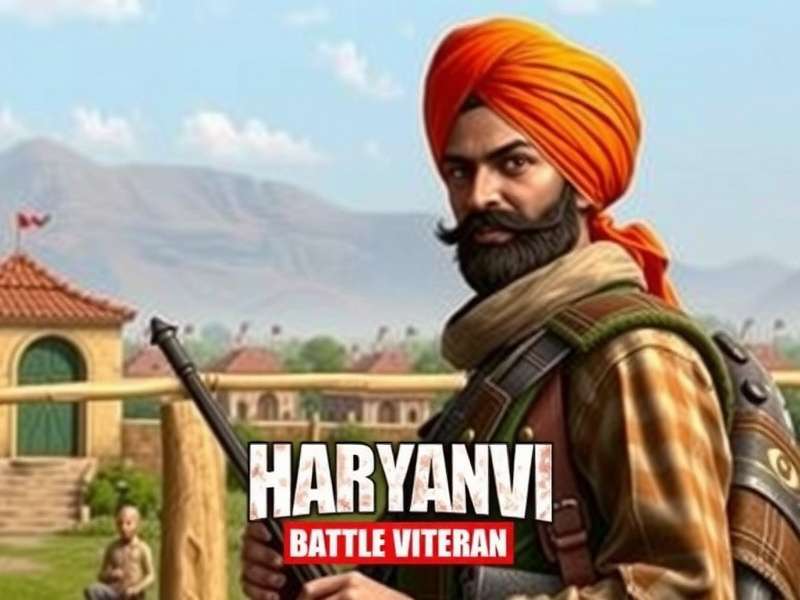
Exploration in Haryanvi Battle Veteran is deeply tied to the game's cultural and narrative goals – players are rewarded for engaging with rural life rather than just rushing from combat mission to combat mission. Key exploration features include:
- Village Interaction: Players can converse with NPCs in authentic Haryanvi dialect, learn folk tales and proverbs, participate in village decision-making, and build relationships with community members that impact gameplay outcomes.
- Farming Mechanics: Players can tend to Suraj Singh's ancestral farm, planting and harvesting crops that provide resources for combat and village missions – reflecting the centrality of farming to Haryanvi identity and survival.
- Animal Husbandry: Caring for cattle, buffalo, and goats provides in-game benefits, with livestock playing a realistic role in rural Haryanvi life (milk for lassi, oxen for plowing, goats for meat and wool).
- Seasonal Changes: The game features dynamic seasonal cycles (summer, monsoon, winter, harvest) that impact farming, combat, and village life – monsoon rains make farm fields muddy and combat more challenging, while winter brings fog that can be used for stealth missions.
-
Cultural Events: Players can participate in or observe traditional Haryanvi events –
dangals (wrestling matches),ragni competitions (folk poetry recitals),haat bazaars (weekly markets), and religious festivals – each offering unique rewards and narrative insights.
The game's open world also incorporates historical accuracy in its representation of colonial-era infrastructure – players will encounter British-built canals, railway lines, and administrative buildings that reflect the colonial impact on rural Haryana, as well as traditional village structures that have remained unchanged for centuries. This contrast between colonial modernity and traditional rural life is a key theme throughout Haryanvi Battle Veteran, reflected in both the environment and the narrative.
Progression & Skill Development 📈
Suraj Singh's character progression in Haryanvi Battle Veteran is tied to both his combat abilities and his connection to Haryanvi culture, with three interconnected skill trees that reflect different aspects of Haryanvi identity:
- Yodha (Warrior): Focuses on combat skills, including mastery of traditional Haryanvi weapons, military tactics learned in the British army, and group combat strategies used by village defense forces.
- Kisan (Farmer): Enhances farming and rural survival skills, including crop cultivation, animal husbandry, navigation of rural terrain, and knowledge of medicinal plants – all of which provide combat and survival benefits.
- Gramsevak (Village Servant): Improves community interaction skills, including Haryanvi dialect mastery, folk wisdom, mediation of village disputes, and leadership abilities – allowing players to rally villagers to their cause against Zorawar Singh and the British.
Players earn skill points through a combination of combat victories, successful farming, community service, and cultural engagement – ensuring that progression rewards both combat prowess and cultural immersion. This balanced progression system has been praised by critics for encouraging players to engage with all aspects of Haryanvi life, not just combat, creating a more holistic and culturally authentic gaming experience.
Stealth & Strategy 🧩
While Haryanvi Battle Veteran features intense combat, it also emphasizes stealth and strategy – reflecting the reality of rural resistance in colonial India, where direct confrontation with better-armed British forces and zamindar militias was often impractical. The game's stealth mechanics are uniquely adapted to rural Haryana's environment:
-
Crop Field Stealth: Players can hide in tall
bajra (millet) or wheat fields, using the cover of crops to ambush enemies or avoid detection. - Village Lane Navigation: The narrow, winding lanes of Haryanvi villages provide opportunities for hit-and-run attacks and evasion, with players able to disappear into village homes or courtyards.
-
Night Operations: Many missions are best undertaken at night, using the cover of darkness to move through villages and farmlands undetected – with traditional Haryanvi
diya (oil lamps) providing limited visibility and creating dramatic stealth scenarios. - Community Stealth: Villagers can help players hide from enemies, provide distractions, or spread false information – rewarding players who have built strong relationships with the community.
The game also incorporates strategic elements drawn from Haryanvi rural warfare traditions, including
Rural Haryana Setting & Cultural Authenticity 🇮🇳
Geographical Representation 🗺️
Haryanvi Battle Veteran's open world is divided into six distinct regions, each representing a different geographical and cultural zone of 1920s Haryana – a level of regional detail unprecedented in Indian gaming. Each region features unique geography, architecture, dialect variations, and cultural practices, reflecting the surprising diversity of Haryana despite its reputation as a culturally homogeneous state:
📍 Rohtak/Jind Region (Central Haryana): The game's starting area, representing the heart of Haryana's Jat heartland. Characterized by flat, fertile farmlands, traditional
📍 Kurukshetra/Ambala Region (Northern Haryana): Known as the "rice bowl of Haryana," this region features irrigated farmlands, more permanent
📍 Gurgaon/Faridabad Region (Southern Haryana): Characterized by the Aravalli hill range, forested areas, and semi-arid plains. This region features the Bagri dialect of Haryanvi, a stronger emphasis on animal herding over farming, and unique martial traditions developed for hill combat. The game's bandit missions are primarily set in this rugged terrain.
📍 Sirsa/Hisar Region (Western Haryana): A semi-desert region bordering Rajasthan, featuring
📍 Panipat/Karnal Region (Eastern Haryana): A strategically important region along the Grand Trunk Road, featuring British military outposts, grain markets, and a mix of rural and semi-urban settlements. This region plays a key role in the game's colonial resistance narrative, with several missions involving British convoys and administrative buildings.
📍 Mahendragarh/ Rewari Region (Southwestern Haryana): Known for its metalworking traditions and
The game's geographical accuracy extends to even the smallest details – from the types of trees found in each region (
Architectural Authenticity 🏛️
Haryanvi Battle Veteran's architectural design is the result of extensive research into 1920s Haryanvi village architecture, with the game's art team documenting over 200 traditional Haryanvi homes, community structures, and religious buildings across the state. Key architectural features represented in the game include:
-
Kuccha Homes: Traditional mud homes with thatched roofs (
tikki ), mud-plastered walls, and earthen floors – the primary housing for peasant farmers in 1920s Haryana. -
Pakka Havelis: Brick homes of wealthy farmers and zamindars, featuring inner courtyards (
angan ), verandas (chowk ), and decorative wooden doors and windows. -
Community Ponds (Panna): The social and water hub of Haryanvi villages, with steps leading down to the water,
chabutaras (bird feeders), and surroundingpeepal trees where villagers gather to socialize. -
Chaupals: Open-air community halls where village elders meet to resolve disputes, where
ragni performances take place, and where important village decisions are made. -
Akhadas: Traditional wrestling schools, featuring earthen pits (
akhadon ki kucchi ),jhadu (brooms) for maintaining the pit, andmalas (garlands) honoring champion wrestlers. - Devi Mandirs & Shiv Mandirs: Small village temples dedicated to local goddesses and Lord Shiva, reflecting Haryana's religious traditions – simple structures with earthen idols and minimal decoration, unlike the elaborate temples of South India.
- British Colonial Structures: Administrative buildings, railway stations, and military outposts featuring colonial architectural styles, contrasting sharply with traditional Haryanvi architecture and symbolizing colonial intrusion into rural life.
The game's architecture also reflects the economic realities of 1920s Haryana – the homes of landless laborers are small, single-room mud structures with minimal furnishings, while zamindar homes are large, multi-room structures with separate quarters for servants, livestock, and grain storage. This attention to socioeconomic detail adds depth to the game's setting, helping players understand the economic inequalities that drive the narrative's conflict.
Cultural Immersion 🎭
Beyond combat and exploration, Haryanvi Battle Veteran offers numerous opportunities for cultural immersion – activities that reward players with in-game benefits while deepening their understanding of Haryanvi culture. These include:
- Ragni Recitation: Players can learn and recite traditional Haryanvi folk poetry, with correct recitation unlocking new dialogue options with NPCs and cultural insights into village life.
- Pehlwani Practice: Training at village akhadas improves combat skills and builds community reputation, with players able to compete in dangals (wrestling matches) for rewards and status.
-
Folk Music & Dance: Players can participate in or listen to traditional Haryanvi music (using instruments like
dholak ,been ,flute ) and dance (likeghoomar anddhamal ), with certain musical performances unlocking side quests and cultural rewards. -
Cooking Traditional Dishes: Preparing Haryanvi cuisine using in-game ingredients restores health and stamina, with more complex dishes (like
hariyali kadhi orsarson ka saag ) providing greater benefits. -
Village Decision-Making: Players can participate in
panchayat (village council) meetings, offering advice on disputes and community issues – decisions impact village relationships and unlock unique missions. -
Seasonal Festivals: Participating in Haryanvi festivals (like
Tej , celebrating the onset of monsoon, orBaisakhi , the harvest festival) unlocks cultural rewards and advances narrative relationships with key NPCs.
This emphasis on cultural immersion has made Haryanvi Battle Veteran more than just a game for many players – it has become a digital window into Haryanvi culture for younger generations who may be disconnected from their rural roots, and a source of pride for Haryanvi players who see their culture represented with respect and accuracy. The game's developers have even partnered with Haryana's Department of Culture to create an educational version of the game for schools, using Haryanvi Battle Veteran to teach students about the state's history and traditions.
Development & Production 🛠️
Origins & Vision 🚀
Haryanvi Battle Veteran was conceptualized in 2020 by a team of 15 developers at Haryana Game Studios – a small, Haryana-based indie studio founded by
The initial concept for Haryanvi Battle Veteran was far more modest than the final product – originally envisioned as a mobile game with basic combat mechanics and a simple narrative. However, as the development team began researching Haryana's rural history and martial traditions, they realized the potential for a much more ambitious project. The team spent 18 months in pre-production research, traveling across Haryana to document folk tales, martial arts techniques, village architecture, and dialect variations – often staying in rural villages for weeks at a time to immerse themselves in Haryanvi life.
A key turning point came in 2022 when the team partnered with Daman Games, who recognized the potential of a culturally authentic regional game and provided the funding needed to scale up development. With a budget of approximately ₹90 crore (USD 11 million) – modest by global AAA standards but one of the largest budgets for a regionally focused Indian game – Haryanvi Battle Veteran's development expanded to include a team of 50 developers, including historians, cultural experts, martial arts practitioners, and Haryanvi language specialists.
The development team faced significant challenges in capturing authentic Haryanvi culture – many traditional practices and dialect variations were at risk of being lost, with younger generations moving to cities and adopting more mainstream North Indian cultural norms. To address this, the team partnered with the Haryana Academy of Art, Culture and Languages, recording oral histories from over 100 elderly Haryanvi villagers, documenting traditional martial arts techniques before they were lost, and creating a comprehensive database of Haryanvi dialect variations, folk tales, and cultural practices.
Technical Development Challenges 🚧
Developing Haryanvi Battle Veteran presented unique technical challenges that reflected the game's focus on rural Haryana – challenges rarely encountered in mainstream game development:
- Environmental Authenticity: Creating a realistic representation of rural Haryana required developing new procedural generation algorithms for farm fields, crop growth, and rural vegetation – standard game engines are optimized for urban or fantasy environments, not agricultural landscapes.
- Martial Arts Motion Capture: Capturing authentic Haryanvi martial arts required working with elderly pehlwans (wrestlers) who had never been part of motion capture sessions before, requiring patience and cultural sensitivity to ensure accurate representation without compromising traditional techniques.
- Dialect Recording: Recording voice acting in multiple Haryanvi dialects required finding voice actors from specific rural regions of Haryana – many had no prior voice acting experience, requiring the team to develop specialized recording techniques to capture authentic speech patterns.
- Seasonal Dynamics: Implementing realistic seasonal changes (monsoon rains, winter fog, summer heat) that impact gameplay required developing complex weather and environmental systems that affect both player movement and crop growth mechanics.
- Cultural Animation: Animating traditional Haryanvi activities (farming, wrestling, folk dances, religious rituals) required extensive reference footage and consultation with cultural experts to ensure movements were authentic to 1920s Haryana.
Another significant challenge was balancing cultural authenticity with gameplay accessibility – the team wanted to create an authentic Haryanvi experience without alienating non-Haryanvi players who might not be familiar with Haryanvi culture and traditions. To address this, the game includes optional cultural context menus that explain Haryanvi terms, traditions, and historical references, allowing players to engage with the culture at their own pace without disrupting gameplay flow.
The game's combat system presented its own unique challenges – translating traditional Haryanvi martial arts into engaging gameplay mechanics required finding a balance between authenticity and fun. The development team worked closely with pehlwans from Haryana's most respected akhadas (including the famous
Release & Marketing Strategy 📢
Haryanvi Battle Veteran's release strategy was as unconventional as the game itself, reflecting its focus on regional cultural authenticity over mainstream appeal. The game was announced in August 2024 at the North India Gaming Festival in Chandigarh, with a trailer featuring entirely Haryanvi dialogue (with English subtitles) and footage of real Haryanvi villages and martial arts practitioners alongside gameplay footage – a stark contrast to the polished, cinematic trailers of mainstream games.
The marketing campaign focused on regional channels rather than national media, with targeted advertising in Haryana, Punjab, Delhi NCR, and Uttar Pradesh – regions with significant Haryanvi-speaking populations. The campaign emphasized cultural authenticity over gameplay features, with taglines like "Apni Culture, Apne Heroes" (Our Culture, Our Heroes) and "Haryana Ki Kahani, Haryana Ke Liye" (Haryana's Story, For Haryana) that resonated deeply with regional audiences.
The game's release date was deliberately set for 1st November 2024 – Haryana Foundation Day – a public holiday in Haryana that celebrates the state's formation in 1966. The launch event was held in Rohtak, Haryana's cultural heartland, featuring traditional Haryanvi folk performances, pehlwani matches, and a panel discussion with the game's developers and cultural advisors. The launch was attended by Haryana's Minister of Tourism and Culture, who praised Haryanvi Battle Veteran as "a landmark achievement for Haryanvi cultural representation in the digital age."
In a unique marketing move, the game's developers distributed free copies to rural Haryanvi schools and community centers, prioritizing access for rural Haryanvi players who might not have the means to purchase the game. This grassroots approach paid off, with rural Haryanvi players becoming some of the game's most vocal advocates on social media and in local communities.
Reception & Critical Acclaim ⭐
Critical Response 🎉
Haryanvi Battle Veteran has received widespread critical acclaim, with a Metacritic score of 88/100 (PC) and 86/100 (console) – making it one of the highest-rated Indian-developed games of all time. Critics have praised the game for its cultural authenticity, narrative depth, and innovative combat mechanics, with many noting that it sets a new standard for regional representation in Indian gaming:
🎯 IGN India: "Haryanvi Battle Veteran is a revelation – a game that celebrates Haryanvi culture with the kind of respect, depth, and authenticity that we usually only see in major global gaming franchises. Its combat system, rooted in Haryanvi martial arts, is refreshingly original, and its open world captures the beauty and complexity of rural Haryana in ways that no other game has attempted. This is more than just a great Indian game – it's a great game, period." (9/10)
🎯 GameSpot India: "What makes Haryanvi Battle Veteran truly special is its refusal to stereotype rural Haryana or reduce it to caricature. Instead, it presents a nuanced, human portrayal of 1920s rural life – its struggles, its traditions, its resilience against colonial oppression. The game's combat mechanics are innovative and satisfying, but it's the cultural immersion that will stay with you long after you've finished playing. A landmark achievement for regional gaming in India." (8.5/10)
🎯 North Indian Gaming Chronicle: "As a Haryanvi gamer, seeing my culture represented with such care and accuracy in Haryanvi Battle Veteran was an emotional experience. The dialect is perfect, the traditions are authentic, the landscapes are instantly recognizable – this is our story, told our way. Beyond the cultural representation, it's also just a damn good action-adventure game with deep combat mechanics and a compelling narrative. Haryanvi Battle Veteran has set the bar for what regional Indian gaming can and should be." (10/10)
🎯 Indian Express Gaming: "Haryanvi Battle Veteran succeeds where so many culturally specific games fail – it manages to be deeply authentic to Haryanvi culture while remaining accessible and engaging to non-Haryanvi players. The game's educational elements are seamlessly integrated into gameplay, and its portrayal of colonial-era rural India is nuanced and thought-provoking. This is not just a game about Haryana – it's a game about India's rural heartland, its struggles, and its enduring cultural identity." (9/10)
Critics have also highlighted the game's technical achievements, particularly its realistic representation of rural environments and its innovative combat system rooted in traditional Haryanvi martial arts. Many have noted that Haryanvi Battle Veteran's success challenges the common assumption in Indian gaming that culturally specific content has limited appeal, proving that authentic regional representation can resonate with both local and broader audiences.
Audience Reception 🎭
Haryanvi Battle Veteran has been a commercial and cultural success, particularly in North India, where it has resonated deeply with Haryanvi players and the broader North Indian audience. Within the first month of release, the game had sold over 500,000 copies in Haryana alone – an unprecedented number for a regionally focused game – with strong sales in Punjab, Delhi NCR, Uttar Pradesh, and Rajasthan.
Player reviews on Steam, PlayStation Store, and Xbox Marketplace reflect the game's cultural impact – many Haryanvi players have commented on the emotional resonance of seeing their language, traditions, and geography represented accurately in a high-quality game. One player from Hisar wrote: "Growing up in rural Haryana, I never thought I'd see our villages, our dialect, our wrestlers in a video game – let alone one this good. Haryanvi Battle Veteran feels like coming home, like seeing our story told with the respect it deserves."
The game has also found an unexpected audience among non-Haryanvi players, who appreciate the opportunity to experience a lesser-known aspect of Indian culture. Many players from South India and West India have praised the game's cultural context features, which allow them to learn about Haryanvi traditions while enjoying the gameplay. This cross-regional appeal has been a pleasant surprise for the developers, who initially expected the game to resonate primarily with North Indian players.
On social media, the hashtag #HaryanviBattleVeteran has been used over 3 million times, with players sharing screenshots of their favorite in-game locations (often comparing them to real Haryanvi villages), posting videos of themselves recreating the game's martial arts moves, and sharing personal stories about their connection to Haryanvi culture. The game has also spawned a vibrant modding community, with players creating mods that add additional Haryanvi villages, folk tales, and martial arts techniques to the game.
Awards & Recognition 🏆
Haryanvi Battle Veteran has received numerous awards and recognition for its cultural representation and gaming excellence:
- Best Indian Game at the India Gaming Awards 2024
- Best Cultural Representation at the Global South Gaming Awards 2024
- Best Narrative (Regional Language) at the South Asian Game Awards 2024
- Best Indie Game at the North India Gaming Festival 2024
- Special Recognition for Cultural Preservation from the Government of Haryana (2024)
- Nomination for Best Action-Adventure Game at The Game Awards India 2024
- Featured in the "Games for Cultural Understanding" exhibition at the National Museum, New Delhi (2024)
Perhaps the most meaningful recognition for the development team has been the response from rural Haryanvi communities – several villages have held special screenings of the game's trailer, and the game's lead developer, Mahavir Chaudhary, has been invited to speak at cultural events across Haryana about the importance of digital preservation of Haryanvi traditions.
Community & Cultural Impact 👥
Player Community & Ecosystem 🎮
Haryanvi Battle Veteran has fostered a vibrant and engaged player community, with a particular focus on cultural preservation and regional pride. The game's official Discord server has over 100,000 members, with dedicated channels for Haryanvi language discussion, folk tale sharing, martial arts techniques, and historical context – far beyond the typical gaming discussion topics. The developers have embraced this cultural focus, regularly hosting AMAs (Ask Me Anything) with Haryanvi cultural experts, folk artists, and historians alongside game developers.
The game has also spawned numerous community initiatives, including:
- Haryanvi Language Preservation Project: A community-driven effort to document and preserve Haryanvi dialect variations, using the game's language database as a starting point.
- Virtual Akhada: Online wrestling tournaments using the game's pehlwani mechanics, with real-life Haryanvi pehlwans judging competitions and providing feedback to players.
- Digital Folk Archive: A community-curated archive of Haryanvi folk tales, songs, and poetry, inspired by the game's cultural content and hosted on the official game website.
- Rural Gaming Labs: Community centers in rural Haryana where young people can play the game and learn about their cultural heritage, supported by the game's developers and local NGOs.
The game's subreddit (r/HaryanviBattleVeteran) has become a hub for both gaming discussion and cultural exchange, with players sharing personal stories, family histories, and photographs of rural Haryana alongside gameplay tips and strategies. This blending of gaming and cultural community has made Haryanvi Battle Veteran a unique phenomenon in Indian gaming – more than just a game, it has become a digital gathering place for Haryanvi culture enthusiasts.
Post-Launch Content & Support 🆕
The development team at Haryana Game Studios has committed to long-term support for Haryanvi Battle Veteran, with a robust post-launch content plan focused on expanding both gameplay and cultural content:
- Regional DLC Packs: Each DLC focuses on a specific district of Haryana, adding new villages, folk tales, martial arts techniques, and historical missions – the first DLC, focusing on Kurukshetra's Mahabharata heritage, was released in December 2024 to critical acclaim.
- Multiplayer Co-op Mode: A 4-player cooperative mode allowing friends to explore rural Haryana together, complete village defense missions, and participate in team-based dangal (wrestling) competitions – scheduled for release in early 2025.
- Educational Mode: A non-combat version of the game designed for schools and cultural institutions, focusing on Haryanvi history, culture, and environmental knowledge – developed in partnership with Haryana's Department of Education.
- Cultural Update: Regular free updates adding new folk tales, festivals, and cultural practices based on community suggestions and ongoing research into Haryanvi traditions.
- Accessibility Improvements: Ongoing updates to make the game more accessible to players with disabilities, including improved controller support, text-to-speech for Haryanvi dialogue, and adjustable difficulty settings for combat and farming mechanics.
The developers have also committed to ongoing cultural research, partnering with universities and cultural institutions to continue documenting Haryanvi traditions that can be incorporated into future updates. This commitment to cultural accuracy and ongoing learning has earned the game respect beyond the gaming community, with cultural preservation organizations praising Haryanvi Battle Veteran as an innovative tool for digital heritage preservation.
Broader Cultural Impact 🎭
Beyond gaming, Haryanvi Battle Veteran has had a significant cultural impact in Haryana and beyond, sparking renewed interest in Haryanvi traditions among younger generations and challenging stereotypes about rural North Indian culture. The game has been featured in mainstream Indian media, with articles in publications like The Times of India, Hindustan Times, and The Hindu discussing its cultural significance and what it means for regional representation in Indian digital media.
Perhaps most significantly, Haryanvi Battle Veteran has inspired other regional game development projects across India, with developers in Punjab, Rajasthan, Bengal, and Tamil Nadu announcing games focused on their own regional cultures and histories. In an interview with Economic Times, the CEO of the Indian Gaming Federation stated: "Haryanvi Battle Veteran has proven that regional cultural content can be commercially successful and critically acclaimed in Indian gaming. It has opened the door for a new wave of Indian games that celebrate our diverse regional cultures, rather than trying to appeal to a generic 'Indian' audience or copying Western game tropes."
The game has also had a tangible impact on cultural preservation in Haryana – the Haryana Academy of Art, Culture and Languages has reported increased interest in Haryanvi folk arts and martial arts among young people since the game's release, with enrollment in pehlwani akhadas (wrestling schools) up by 30% in some districts. Local governments in Haryana have even begun using the game as a promotional tool for rural tourism, highlighting the real villages and traditions that inspired Haryanvi Battle Veteran.
For the development team, this broader cultural impact is the proudest achievement of Haryanvi Battle Veteran. As lead designer Mahavir Chaudhary stated in a recent interview: "We set out to make a great game that celebrated Haryanvi culture, but we never imagined it would have this kind of impact – inspiring young people to learn their traditions, preserving dialects that were at risk of being lost, even encouraging tourism to rural Haryana. If Haryanvi Battle Veteran helps ensure that Haryanvi culture thrives in the digital age, then we've succeeded beyond our wildest dreams."
Recommended by Daman Games 🎯
As the proud publisher of Haryanvi Battle Veteran, Daman Games is honored to present this landmark gaming achievement that celebrates the rich cultural heritage of Haryana and North India. Haryanvi Battle Veteran represents our commitment to supporting authentic Indian game development that celebrates the diversity of our nation's regional cultures – a commitment that sets us apart in the Indian gaming industry. Whether you're a fan of action-adventure games, a student of Indian rural history, or simply someone who appreciates culturally authentic digital experiences, Haryanvi Battle Veteran offers an immersive journey into the heart of Haryana's warrior culture and agrarian heritage that you won't find anywhere else. Join over a million players across North India in experiencing the game that is redefining what regional Indian gaming can be – Haryanvi Battle Veteran is more than a game, it